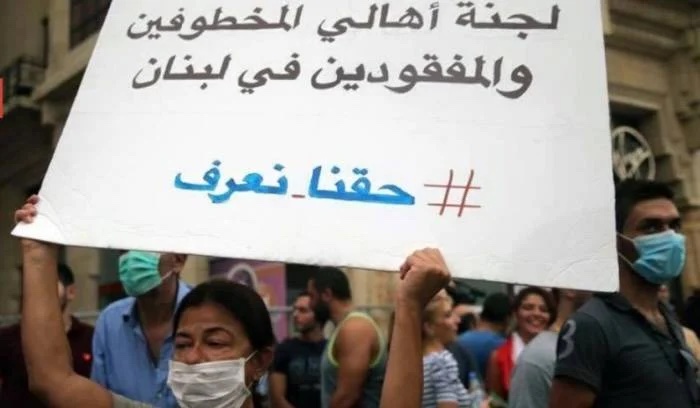
The Lebanese missing in Syria: A tragedy turned political weapon
The disappearance of more than 650 Lebanese in Syria during Lebanon’s Civil War and the Syrian occupation remains an open wound for the country. For decades, the families of the missing have lived in limbo – grieving but unable to find closure, hopeful yet overwhelmed by despair.
Parents, siblings, and children of the disappeared have endured years of uncertainty, their lives shaped by unanswered questions. Over the years, some Lebanese and Syrian politicians have even denied the existence of Lebanese missing in Syria.
With the fall of the Assad government and rebel forces opening the prisons — including the infamous Sednaya prison — this week, the hopes of many families have been reignited. Two Lebanese, Ali Hassan al-Ali, missing since 1984, and Souheil Hamawi, imprisoned since 1992, were freed following the rebel offensive, though official confirmations remain scarce.
The Association of Former Lebanese Political Detainees in Syria has suddenly been overwhelmed with messages from desperate families seeking information. For many, this fragile glimmer of hope offers a chance to believe that their loved ones could still return.
The systematic use of enforced disappearances by Syria extended beyond its borders, becoming a tool of control during its presence in Lebanon from 1976 to 2005. From Hafez al-Assad's rise to power in 1970 to Bashar al-Assad's continuation of authoritarian policies, these practices were employed to suppress dissent and silence opposition.
Those deemed a threat to Syrian authority were imprisoned and tortured in detention centers across Lebanon, including the infamous Syrian military intelligence facility in the suburb of Anjar in the Bekaa Valley. The prison's proximity to the Syrian border allowed Syrian military intelligence to illegally transfer hundreds of Lebanese detainees into Syria where they subsequently disappeared.
However, Syrian repression was not carried out in isolation. Certain Lebanese factions collaborated with Damascus, using forced disappearances to advance their political agendas.
The growing influence of Hezbollah in Lebanon, particularly after the outbreak of the Syrian Civil War in 2011, has perpetuated aspects of this repressive legacy. Forced disappearances have thus become not only a symbol of Syrian domination but also a tool for local actors to consolidate their power.
Instrumentalization
Since the end of the Lebanese Civil War, the issue of the disappeared has been manipulated at every level of society and governance. This instrumentalization intensified after Syria’s withdrawal from Lebanon in 2005, as political factions used the issue to serve shifting interests.
Two key players, the Free Patriotic Movement (FPM) and the Lebanese Forces (LF), demonstrate how the disappeared have been turned into a political weapon. Under Michel Aoun’s leadership, the FPM initially championed the cause of Lebanese detainees in Syrian prisons.
During the Syrian occupation, the FPM worked with NGOs like Solide to draw attention to the plight of the disappeared, aligning its advocacy with Aoun’s opposition to Syrian influence. However, this commitment faded after the signing of the Mar Mikhael Agreement with Hezbollah in 2006 and the FPM’s gradual rapprochement with the Syrian government. Aoun’s presidential ambitions, which required the support of the pro-Syrian camp, took precedence over the cause of the detainees.
By sidelining this issue, the FPM demonstrated how pragmatic political considerations could outweigh moral imperatives, reducing the plight of the disappeared to a mere tool in broader political calculations. Last week, following initial reports that a Lebanese detainee had been freed from Hama prison, former FPM MP Ziad Assouad remarked: “If this information is true, Aoun will bear the primary responsibility, as he abandoned this cause and treated them as though they were dead.”
After the Civil War and the imprisonment of Samir Geagea, the LF used the issue of the disappeared to rebuild their political legitimacy and strengthen their opposition to the Syrian regime. Unlike the FPM, the LF maintained an active stance in organizing public campaigns, proposing legislation and openly condemning Syrian repression.
This consistent engagement positioned the LF as a credible alternative to the FPM, particularly after the latter aligned itself with Damascus. However, their aggressive politicization of the issue was not without ulterior motives. At times, it revealed a broader strategic ambition: To establish themselves as a key player in Lebanon's postwar political landscape.
On Dec. 8, the day Asad fell, the LF posted a video of Geagea on X, where he emphasized the party's proactive stance in seeking information about Lebanese detainees in Syria. Positioning themselves once again as the leading advocates for this cause, Geagea stated, “As soon as the issue of the prisoners emerged, we immediately started making calls.”
Seeking justice
The decades-long instrumentalization of the disappeared in Syrian prisons underscores a profound failure of accountability. The time has come to seek answers and obtain reparations. For the families of the missing, the stakes are enormous.
The establishment of the National Commission for the Disappeared in 2018 provided a glimmer of hope. However, this independent body operates in a deeply politicized landscape, where its mandate remains vulnerable to the same forces that have long obstructed progress.
Seeking justice requires isolating investigations from political exploitation and ensuring a transparent, independent process. Political analysts emphasize the need for a thorough review of Syrian-Lebanese relations to prevent future manipulation of this issue. The suffering of families should no longer serve political ambitions but instead inspire collective reflection on this dark chapter in Lebanon’s history.